

Ack, a whole month without posting! It’s the busy season for my wife’s business, so blogging took a backseat. I’ve been flitting around from experience to experience, but I’m happy to report that I played through the entirety of Dispatch, so let’s dust off this website and dive right into it.
Dispatch comes from AdHoc studio, which is comprised of alumni from Telltale games, Ubisoft, and Night School. My familiarity with this lineage comes from my fondness for the Telltale narrative games. I, like so many others, was dazzled by their Walking Dead game back in 2012. The game was a captivating fusion of adventure game, and a narrative that heavily emphasized the choices you made throughout its episodes. They found success with multiple other properties, but not many captured the highs of the Walking Dead. I was also enamored with The Wolf Among Us, and I still eagerly await its sequel, which currently seems to reside in the depths of development hell. But AdHoc has given us a spiritual successor to these games, and it hits it out of the park.
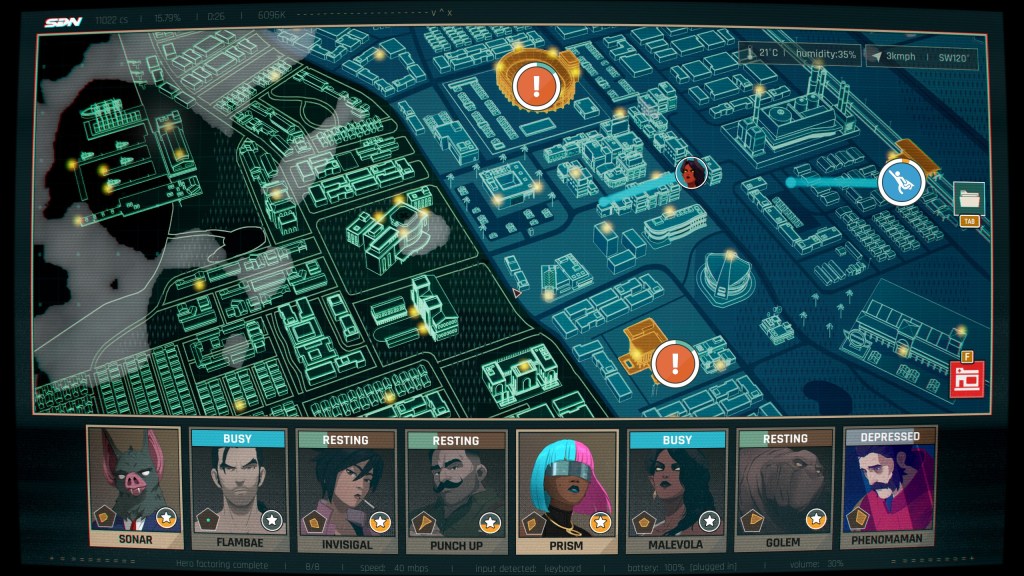
Dispatch is a superhero workplace drama comedy, where you play as a superhero, Robert, who has been laid low by villains. You are hired for a desk job dispatching superheroes in exchange for the company taking steps to restore your superhero status. I’m being purposefully opaque with the game’s plot because the narrative is the beating heart of this game. More than any other game I have played, one could get most of the experience of this game by watching a stream of someone else playing it. There are solid mechanics at play here, but many of them don’t meaningfully impact the story; They run parallel to it, imparting a sense of urgency where, behind the scenes, the narrative doesn’t seem to care if you fail to grasp the mechanics or not.
The game is cleanly divided into two different modes of engaging with it: You have the narrative sections, where you are essentially watching a TV show and prompted to chime in with a dialogue choice or major decision here and there, and then you have the gameplay segments. You are seated at Robert’s computer and receive calls from across the city of Torrance, and have to send out appropriate heroes to respond to them. Once the heroes arrive, the game does a behind the scenes dice roll, smoothly displayed as a little puck sliding across your stat lines, to determine whether you succeed or fail the call.
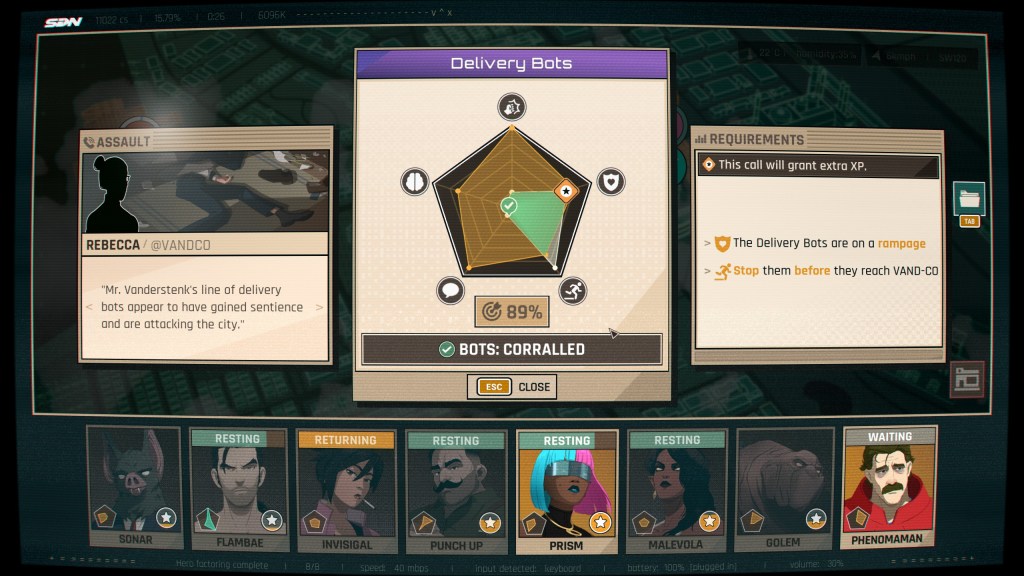
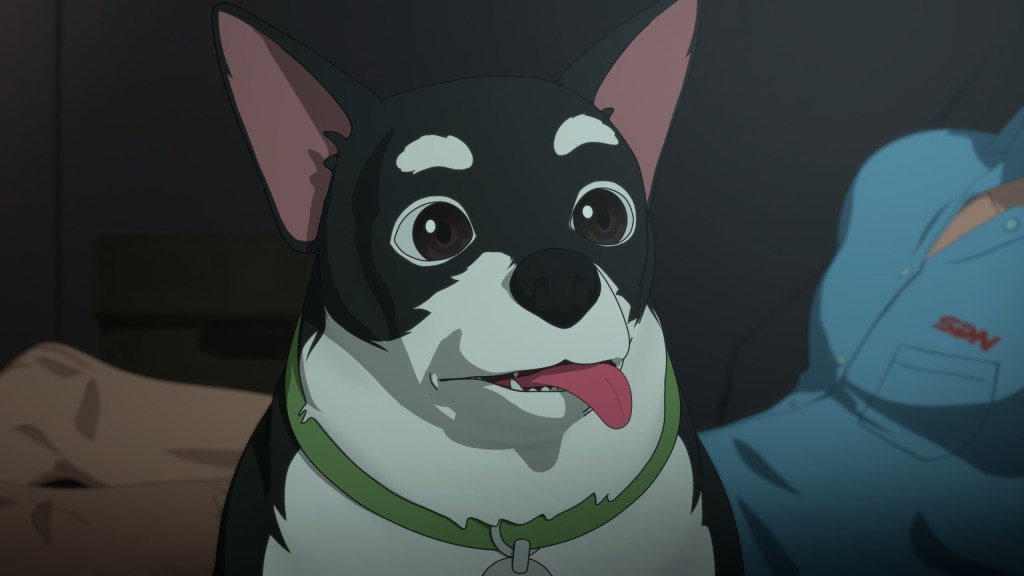
I may sound cross when I say the gameplay segments don’t meaningfully impact the narrative, but it is a fun system. It’s engaging juggling the time management, travel times, team synergies, and different powers of your available heroes. Your team has lively banter throughout the process, so you’re still receiving a heaping dose of that narrative goodness. It just doesn’t meaningfully impact the plot. You are set out to play with the dispatch minigame, and then you are rewarded with lavishly animated, excellently acted cutscenes, but they don’t feed into each other very often.
Early on, you’re tasked to fire a team member go from the company, and to hire a replacement. These paired decisions gave the biggest feedback to the dispatch gameplay, and I was craving more of those interactions as I played. I very much enjoyed my time with the game, but I definitely left the experience wondering whether it wanted to be a video game, or some other type of interactive media that hasn’t had it’s heyday in quite some time: Interactive TV shows.
Around 2018, Netflix released Bandersnatch, a spinoff of their successful Black Mirror show, which had a fascinating gimmick: It was a choose your own adventure TV show. The special performed well, and Netflix followed up with many other interactive programs, mostly aimed at a younger audience. I wish I could have taken a look at some of these again, but Netflix has recently eliminated every trace of these curious specials from their platform. They seemed to have a bright future, but Netflix pivoted into mobile games to scratch those itches for interactivity, and as far as I know, other platforms didn’t tip their toes into similar experiments. Dispatch apparently had a rocky development cycle, and given it’s production values, I could envision a world where this was cooked up as an interactive TV special instead of a traditional video game. You could remove the dispatch sections, replacing them with short vignettes of the Z-Team out and about the city serving their clientele, and the episodes could be leaner, more compact packages, possibly better equipped to serve modern attention spans.
All this is conjecture of course, and we live in this timeline. The version of Dispatch we have is something to be celebrated, and even if it isn’t the pinnacle of interactivity, it still is a great gaming experience. I’ve wrestled with similar ideas in the past in my limited exposure to visual novels: Is pressing a button to essentially turn the page still a video game? Even with the limited interactions, they’re still experiences wholly unique from books. Dispatch could have functioned without the gameplay segments, but I still found myself enjoying those sections. If Adhoc gets a chance to revisit this world, I’d love to see what refinements they can make, because if they can make the narrative and gameplay intertwine more next time, then they’ll uplift every portion of the game and soar to dizzying heights.


 Bro Bromero's Broad Blog
Leave a comment