


My furnace motor has died, so I’m writing this in a 90 degree house right now. It is absolutely dreadful. What isn’t dreadful is today’s throwback entry to a PSP game that never got much of the spotlight: Neverland Card Battles. This was an early PSP game, releasing in the tail end of 2008, and is not likely to land on any “Best of the PSP” lists. Not to say that it’s a bad one, but it definitely has flaws. I’m always a sucker for digital card games though, so let’s dive in.
I’ve talked about Magic the Gathering before on this blog, and it’s presence looms heavily over this game. So many card games model their structure on what Magic has established, and this is very much true here. Your goal is to eliminate the enemy dominator, by pummeling them with your own dominator and summoned units. Combat consists of turns taken back and forth between the two players, with a card playing phase, followed by a combined movement and combat phase. Yep, movement! Neverland Card Battles takes place on a grid battlefield and is a marriage between SRPG and TCG.
By incorporating a battlefield, the game begins introducing several elements that guarantee this game will always be confined to a digital space, as it would be unwieldy and massive if this were to be a physical tabletop game. Magic is the clear parent to this game, but Neverland does away with the mana system, as so many other card games in this lineage have attempted to do. What replaces it is the awfully named “cost” system, which introduces area control to the game. Your dominator and units move across the field and paint every tile they pass over your color. Each tile provides 1 cost, which is used to pay for cards, both to play them, and keep them deployed on the field.
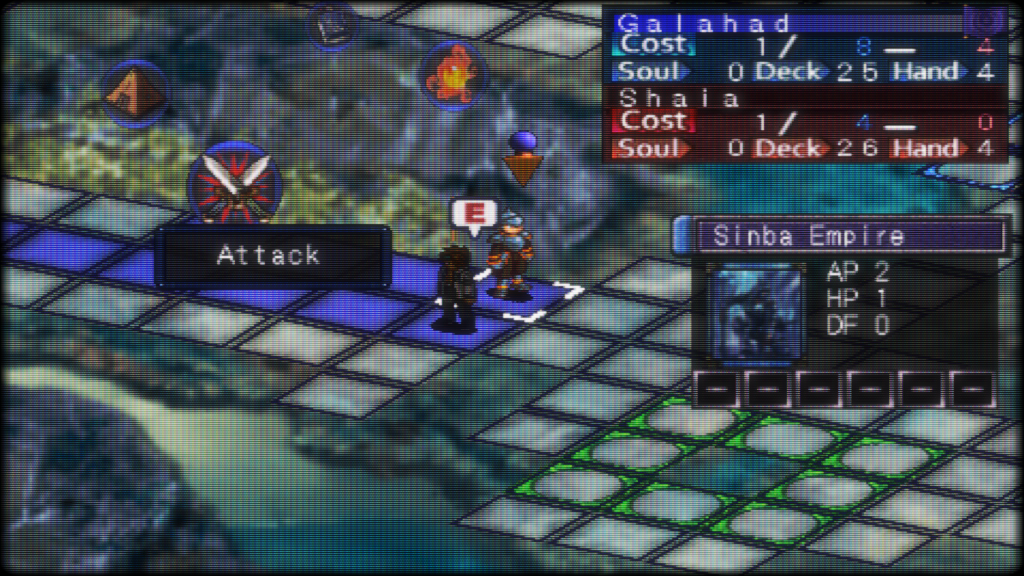
Painting over territory with your movement conjures up the mechanics of Splatoon, and some of the best practices from that game can transfer into this one: Denying your opponent territory by moving onto theirs is very powerful. If you can create chokepoints with your units, you can leave some units in the back to claim the board and give yourself a powerful resource advantage for the match. The early game went quickly for me, with this aggressive strategy drowning my opponents fairly quickly. Eventually the game starts biting back, not with clever strategy, but raw numbers.
Unlike most Magic formats, you are not just a static life total. You are a dominator, with various statistics and bonus abilities. As you progress through the single player mode, your opponents health totals begin to creep upwards, and you can no longer win games through a rushdown; They have enough health to withstand your initial storm, and you will quickly run through your card advantage by following this strategy. Beyond this, the game also introduces special elemental tiles that allow you to summon a matching unit to them, regardless of your distance from them. All of these additions ultimately lead to combat taking a considerable amount of time if you want to eke out a win.
I played a lot of this game around it’s release, but revisiting was definitely not as satisfying. Card games continue to evolve, both in the analog and digital space, and I fear that Neverland Card Battles has mostly been left behind. It’s combination of systems is intriguing, but there is stiff modern competition. Almost everyone has a competent gaming machine in their pocket now thanks to the advent of smartphones, so Neverland Card Battles has to now prove itself over options such as Marvel SNAP, Pokemon Trading Card Game Pocket, or Hearthstone. For my limited playthrough, I played through an emulator at my computer, so I wasn’t feeling the comparison as strongly, but for those still rocking a functioning PSP or strong enough handheld emulator, the comparison had to be made.
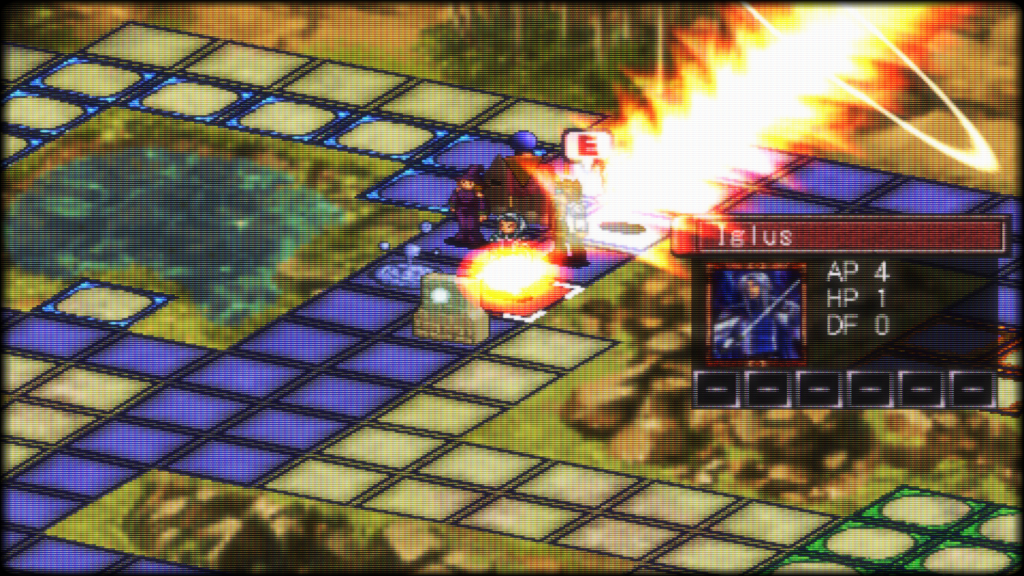
Digital card games have really exploded, and there are multiple critical points you can look towards. While Hearthstone might be one of the first to come to mind, Slay the Spire is the one that dictates the shape of many modern card games. Here is a game that predates Slay the Spire, although you can follow both Spire and Neverland’s lineage back up to Magic. We don’t often see games in this exact space anymore. My mind immediately jumps to 2003’s Phantasy Star Episode III as another card game tactical hybrid, although when I try to jump forward to the present day, it’s harder to conjure up games that have continued this strange lineage. 2022’s Dream Tactics came up as I scanned my Steam Library, but I haven’t given that game a proper deep dive to explore what it brings to the table.
I recognize that I talk about games here mostly, and I have been hooked on card games lately, so expect more entries on those coming up soon. It’s just a fascinating design space to have games that tantalizingly dangle the possibility of being an actual physical card game right in front of me. I’d love to hear about any oddball card games you have experienced, whether physical or digital, I love hearing about them all. We’ll see what next entry has in store for us. Maybe I’ll get hooked on Culdcept Saga again.
 Bro Bromero's Broad Blog
Leave a comment