

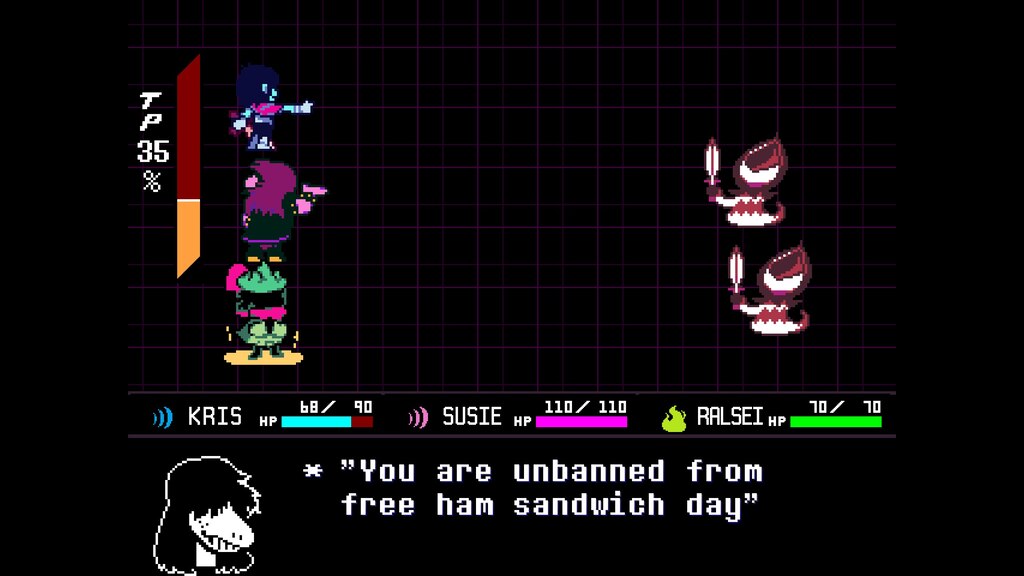
So far on this blog, I’ve found that I have an easier time writing about experiences that have some flaws in them. My entry on Compile was difficult because that’s just an excellently designed game. I’m running into the same difficulties here as I try to muster up words for the first two chapters of Deltarune. This is an exceptional game, even when I am late to the party. I played through the first chapter on release in 2018, but I decided to wait until more chapters had been released before I explored any of the further chapters. With two chapters under my belt, I’m now halfway through the currently released chapters. Ultimately this story will have five more chapters for me to experience, and I cannot wait to see the rest of this ride.
The designer, Toby Fox, is an indie superstar with plenty of memorable designs. From the humble Earthbound hacks of his youth, to musical accompaniments to Homestuck, all the way to the runaway success of Undertale, he’s won over many hearts. Deltarune is a spiritual successor to Undertale, but I think the game could still be enjoyed on it’s own. It pulls from a long history of RPGs, and I find that it is most strongly pulling from Earthbound and Chrono Trigger, with it’s quirky sensibilities and three man party combat. More than anything however, is the mechanical conversation this game has with Fox’s previous work, Undertale.
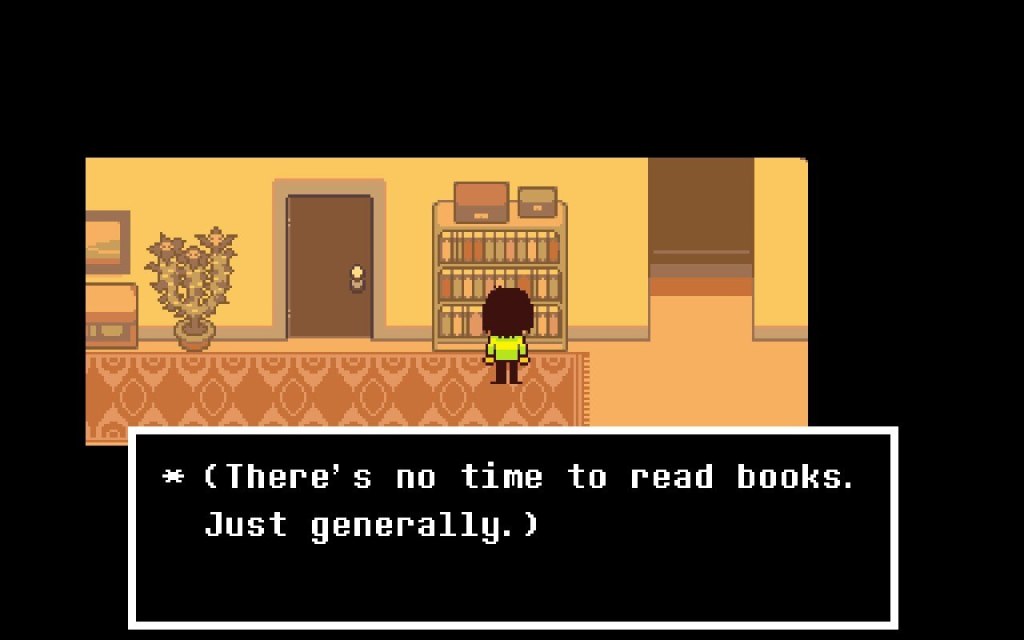
There’s a lot of thematic resonance going on as well, but I just want to yap about mechanics for a bit. Undertale’s big draw was that you have the freedom to handle every situation without violence, which is quite rare in a JRPG. You can resolve problems with the enemy mid combat through other means, but there’s still a very real challenge to the game. Enemy attacks in Undertale are resolved as brief dodging sequences akin to a bullet hell, and this idea carries forward into Deltarune. The twist presented in this installment is that by letting the bullets graze by, just barely missing you, you can build up the tension meter, which powers your team’s special maneuvers. This little addition goes a long way to making the combat much more engaging here than it was in Undertale, especially since the game is now a team affair, as opposed to a solo endeavor.
So much of this blog has been talking about the mechanics and functions of things, but the truth is the mechanics aren’t even Deltarune’s strongest assets. The story on display is rich and layered, and I don’t want to pick it apart because spoiling the experience would do a real disservice to the game. It has the ideas of bizarre parallel realms of Alice’s Adventures in Wonderland married with traditional fantasy RPG stories, with a fine sprinkling of the emerging core question of “What’s the real world if this parallel reality is better than the reality we have?”
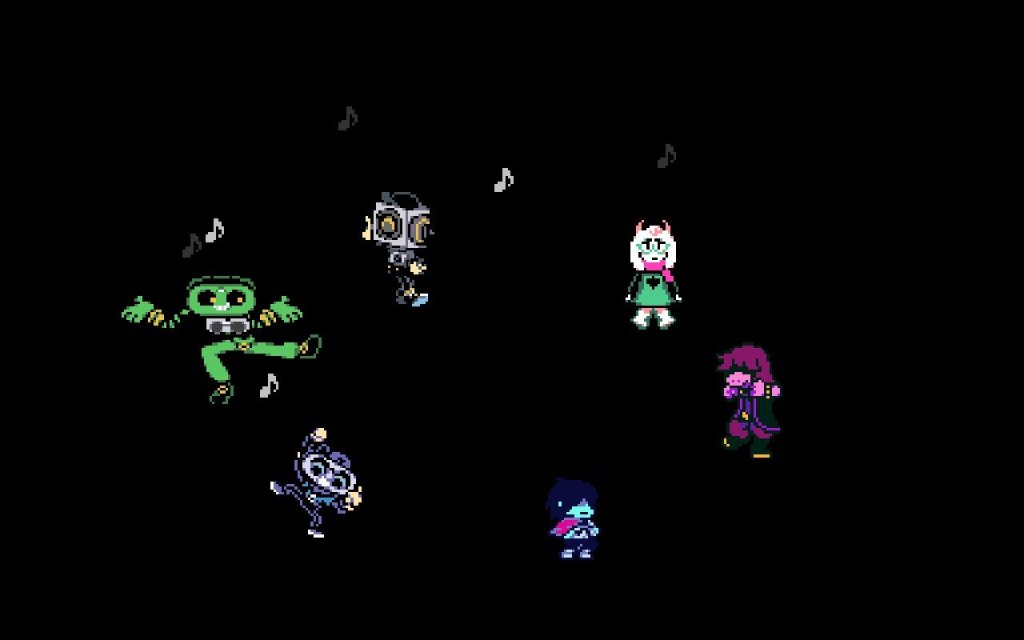
What is easy to talk about spoiler-free is how fantastic the music in this game is. All the tunes are immediately catchy, and Fox’s penchant for leitmotifs that permeate through both Undertale and Deltarune make catching all of the musical references very engaging. It’s hard to resist putting on the music outside of playing it, and I’m happily writing this entry to the soundtrack this very moment.
All of the individual elements at play are outstanding, but watching them all coalesce elevates this game to one of my favorite experiences of the year. If it continues this run, I could easily see this becoming an all-time favorite just like Undertale. The praises of these games are sung all over however, and I am merely adding another voice to the chorus. If you’re remotely tuned into indie video games, you’re likely aware of this series, so I have to wonder: What’s this experience like if you’re removed from the history and experiences of JRPGs?
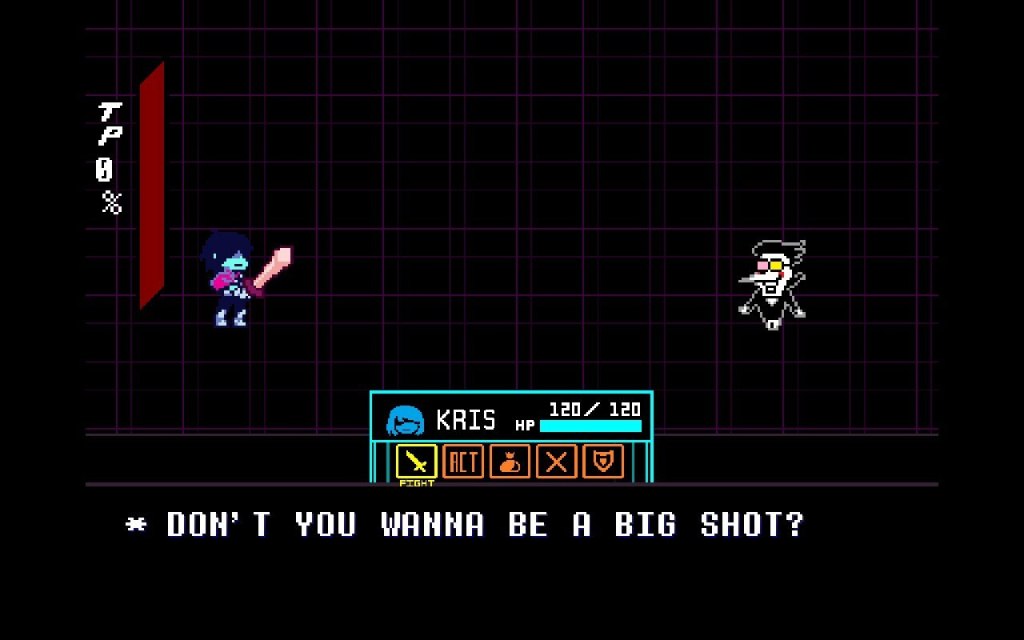
Every experience has the opportunity to be the introduction to entire formats and genres for an individual. When I played Earthbound as a child, I lacked the context to understand how much it structurally functioned as a Dragon Quest parody. Despite this, it resonated with me deeply. Deltarune is clearly a hit, and has struck a chord with audiences of all ages. I would hazard a guess that for many of those players, Deltarune could be their introduction to this genre. Even though so much of this game is a conversation with the games that came long before it, it proudly stands on its own, and I’m happy to give this game my strongest recommendation.
If you come from a video game background, come to Deltarune for the incredible atmosphere and unique fusion of gameplay and story. If you’ve stumbled across this blog from my board and card game entries, try out Deltarune and see how tightly woven mechanics and narrative can become. If you only read my entry on Cars 3 then, well… You can dive into a world where every minutiae is actually explored, and mystery and intrigue develops at every step.
 Bro Bromero's Broad Blog
Leave a comment