


The roguelite genre has seen an explosion in popularity in recent years, and has pushed the format in all kinds of fascinating directions. One can often reduce new developments in the format to statements such as “It’s The Binding of Isaac with time freezes” or “It’s Balatro, except it’s also Peggle”. While these boiled down elevator pitches capture your interest, most modern roguelites carve out an unique identity of their own beyond a quick blurb. Mechanics emerge both from the fusion of format, and the personal melange of spices that developers bring to the table. So when I say that this game is “The lovechild of Earthbound and Slay the Spire”, I assure you there is a lot more than just its primary influences at work here.
Crush the Industry by Cognoggin Games is easy to pitch if you’re familiar with the works that inspire it. Take the whimsical attitudes and presentation of Earthbound, along with its first person turn-based combat and fuse it with the “One more run” deckbuilding appeal of Slay the Spire. Thematically, the game is the rise of a beleaguered game developer through the corporate ranks, which gives the game a lot of charm to pull from. Each of the game’s different environments pull from a different realm of development, from Community Management, all the way to the Ruthless world of Corporate. In this way, the game shares the critical view of modern industry that fellow indie developer AggroCrab explored in Going Under, so it is a proven and rich soil to work within. The lampooning is strong across every area, and one of my early run highlights was encountering an enemy aptly named “Unbalanced Mechanic” and being struck with an attack that threatened to end my run in a single hit. Despite calling itself unbalanced, and feeling very much so initially, it was a window into what makes this game sing mechanically.
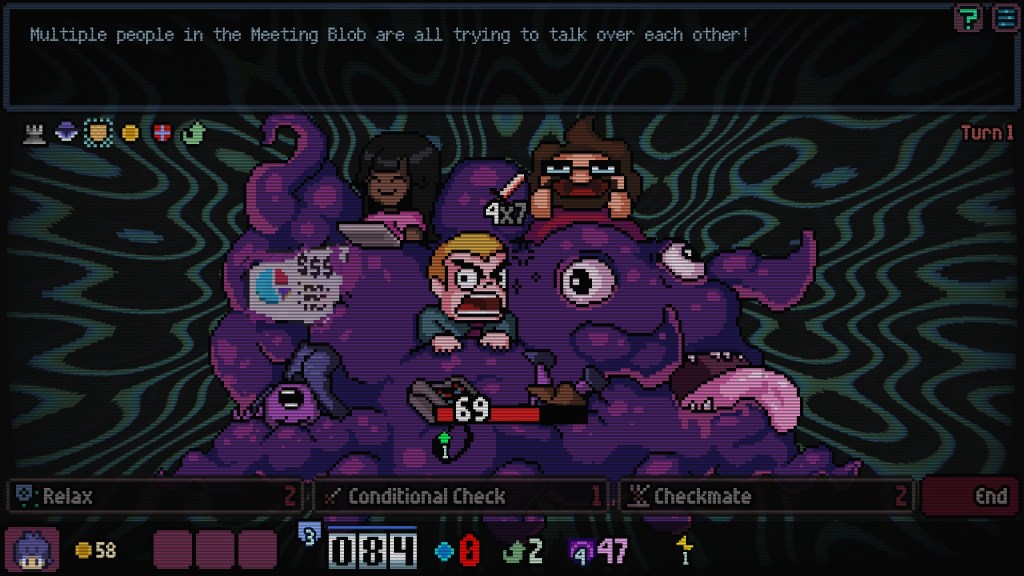
Like Earthbound, Crush the Industry uses a rarely explored rolling odometer system of health management. For the unfamiliar, when you take damage, it slowly ticks downward, giving you time to intervene and begin healing, or preemptively end combat to end the health loss. In Earthbound, this was a charming quirk of the system, but one that I found to be underutilized. As you progressed farther in the game, healing PSI and barrages of bottle rockets were easily decided on, leaving the odometer system as a mere curio of a JRPG classic. In Crush the Industry, the deck building mechanics all come together to make this injection of real time urgency much more fulfilling.
Like other deck builders, you draw into a selection of available actions that you’ll gradually build over your run. Unlike its contemporaries, the game is not strictly a deck builder. There’s some fuzzy, obfuscated probabilities going on behind the scenes, that only give you some vague ideas of what’s being “drawn” next. You have full info of what’s going into your deck, and an indicator of what the next card is, but calling it a deckbuilder is still not entirely accurate. So unlike Jeff’s prescribed bottle rocket barrages, you are thinking on your feet every turn. Moving fast enough in response to damage can end the combat well before you take the full brunt of damage, and here, the reward of preserving your health is much higher than it was in Earthbound. There are no casual strolls to a magic butterfly, or snarfing down a sandwich from an ample inventory. You have three inventory slots and only so many breaks at the cafe before you’re staring down a mechanically satisfying boss.

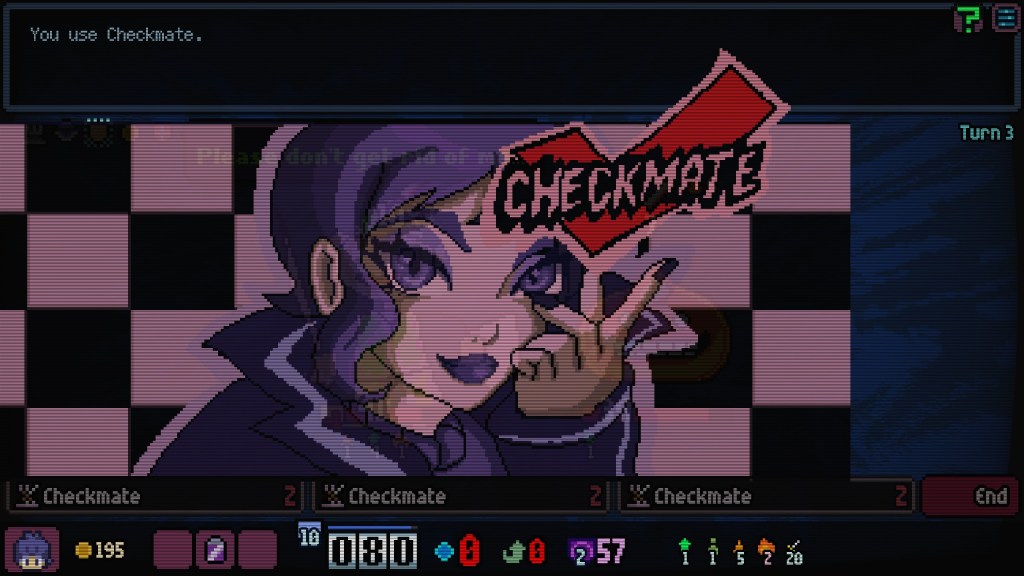
The variety between runs is satisfying, with ample choices of starting perks, difficulties, and a slate of characters that gave each run a very different flavoring. My favorite character from my time with the game was Fia, the artist, who comes equipped with the unique ability to dish out stacks of a paint splatter debuff, which can be cashed in for very different payoffs with the abilities you’ll gain over the run.
Roguelites iterate upon themselves frequently, and often stand on the shoulders of giants before them, so I often wonder how these games would come across when they’re someone’s introduction to this format. It is unlikely that someone stumbles across this game without having played Slay the Spire, but as time marches on, I think it’s increasingly likely that younger audiences will not have experience with Earthbound. Even without that experience to call upon, I like to think that this game could make a strong mechanical impression. Earthbound has had a massive impact on the world of independent gaming, most easily seen in Undertale, which is now likely the most common Mother-esque experience for a new generation. But that brought its own spin as well, a curious fusion of bullet hell and JRPG. As the years march on, games that are fusions of two identifiable games become the cultural touchstones themselves. Earthbound was a childhood game for me, and even without the context of being a Dragon Quest parody, it still became a foundational game for me.
I feel lucky enough to be in a position where Crush the Industry also got to appeal to my long love of deckbuilders. Most familiar with the video games will point to Slay the Spire, as the origin point of this format, but if you jump to board games, you’ll find 2008’s Dominion as the kickoff point for what would eventually become a beloved format across video games and board games. If you decide to peel back layers even farther, you could point out that Magic the Gathering was the card acquisition inspiration that led to the development of Dominion, given that the designer made fan expansions before sitting down to make Dominion.
Needless to say, Crush the Industry has a lot of gaming history to pull from, both digital and analog. Does it stand up on its own merits? I think so. I’m happy to have it join my sizable rotation of roguelites. Even if you experience this game without the background of its two primary influences, I think you’ll find this to be a lot of intriguing mechanics all wrapped together. I didn’t even touch on the long history that led to the sanity mechanic on display!
Crush the Industry is available through Steam and just recently received a considerable update that I have yet to fully dive into. If you’ve played anything that reminds you of this game, I’d love to hear about it!
 Bro Bromero's Broad Blog
Leave a comment